Sponsored article
How to Read a Pork Jowl Specification Before Receiving a Wholesale Batch
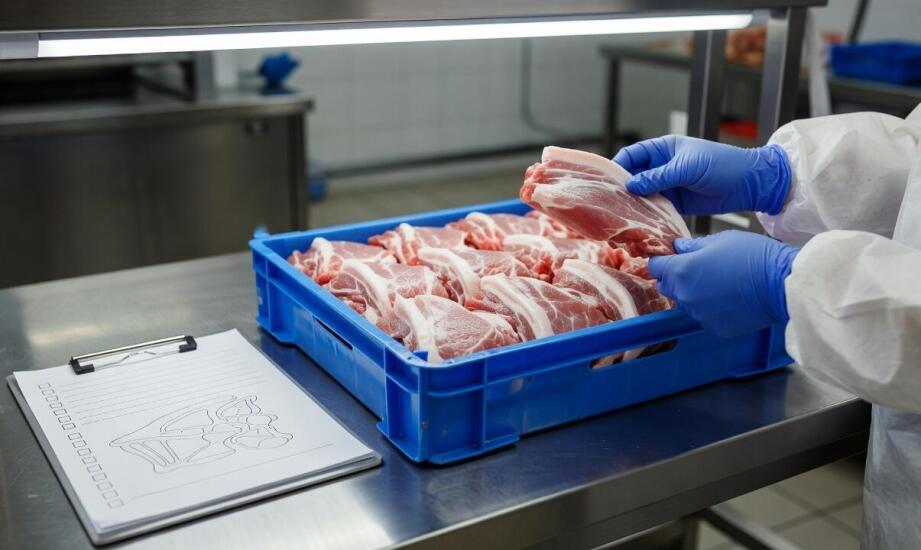
- What Does the Product Name Actually Mean in a Specification?
- How Should the Form and Preparation of the Raw Material Be Checked?
- Why Do Thermal Condition and Packaging Need to Be Checked?
- How Should a Batch Be Received According to Consistent Criteria?
- A Clear Specification Simplifies Wholesale Receiving
- FAQ
A specification for rind-on pork jowl should allow a wholesale customer to clearly determine what raw material will be delivered and according to which criteria it will be assessed. The commercial name alone does not describe all the characteristics that matter in meat processing. Before accepting a batch, it is worth checking the product form, thermal condition, preparation and packaging method, batch identification and compliance with the conditions agreed with the supplier.
Read more: What are the benefits of working with a wholesaler offering Polish fruits and vegetables?
What Does the Product Name Actually Mean in a Specification?
The first step is to make sure that both parties understand the commercial name of the cut in the same way. The presence of rind is an important characteristic of the raw material, which is why a rind-on variant should be distinguished from products prepared without rind or trimmed in a different way.
When ordering pork jowl, it is therefore not enough to rely on the product name alone. The commercial specification may additionally define the trimming and preparation method, acceptable variation between individual pieces or requirements concerning the form of delivery.
The more precisely both parties define the characteristics that matter for the intended processing application, the easier it is to inspect the delivery without relying on a subjective assessment of individual pieces.
How Should the Form and Preparation of the Raw Material Be Checked?
Pork jowl contains fat, muscle and connective tissue as well as rind, and the proportions of these tissues can vary between individual pieces. From a processor’s perspective, it is therefore important that the batch meets the requirements of the specific recipe.
The specification should correspond to the intended processing application, particularly when the proportions of individual tissues affect subsequent comminution, mixing or heat treatment.
Michna Meat supplies fresh and frozen pork cuts, including products with specified fat content. When receiving a delivery, the actual form of the raw material should be compared with the order documentation rather than assuming that every batch sold under the same name will automatically have identical processing characteristics.
Why Do Thermal Condition and Packaging Need to Be Checked?
Whether the product is supplied fresh or frozen affects transport, storage and subsequent preparation for production.
The thermal condition must correspond to the agreed order requirements, and receiving procedures should be appropriate for the type of delivery.
Packaging integrity, labelling and the ability to clearly assign the product to a specific batch are also important.
For frozen goods, attention should be paid to signs that may indicate irregularities during storage or transport. Visual inspection alone, however, does not replace the measurements and documentation required by the processing plant’s control procedures.
For larger deliveries, appropriately selected packaging units can also make storage and the planned use of raw material in production easier.
How Should a Batch Be Received According to Consistent Criteria?
The receiving process should follow a predefined procedure so that successive deliveries are assessed in a comparable way.
The goods should first be compared with the specification, followed by checks of the documentation, batch identification, packaging condition, thermal conditions and the raw material characteristics included in the order.
If the customer requires a particular trimming method, fat content or packaging format, these criteria should be agreed before the delivery is prepared.
If a non-conformity is identified, it should be documented and linked to the relevant batch number. This makes it possible to determine whether the issue concerns individual packages or a larger part of the delivery and facilitates subsequent analysis of the cause of the deviation.
A Clear Specification Simplifies Wholesale Receiving
A clear specification turns a general product name into a set of criteria that can be verified when the goods are delivered.
For rind-on pork jowl, particularly important factors include the preparation method, thermal condition, packaging, batch identification and the processing requirements agreed by the customer.
This allows the delivery to be assessed according to predefined parameters rather than criteria established only after the goods arrive.
FAQ
Does Pork Jowl Mean the Same as Pork Cheeks?
No. The term pork jowl refers to the jowl or cheek-and-neck area, while pork cheeks refers specifically to the cheek muscles.
This distinction is important when placing orders and preparing B2B product specifications.
Should a Pork Jowl Specification Define the Packaging Method?
Yes, if the packaging method is relevant to storage, transport or the organisation of the customer’s production process.
These conditions are best agreed before the order is fulfilled so that they can later be clearly verified during receiving.
Why Is the Batch Number Important When Receiving Meat?
Batch identification supports product traceability and links the delivery to the relevant documentation.
It is also important when a non-conformity is identified and it is necessary to determine which part of the delivered raw material is affected.
You might be interested

What are the benefits of working with a wholesaler offering Polish fruits and vegetables?

Functionality and Aesthetics – The Perfect Combination in Ceramic Mugs

Personalising doormats – how to tailor them to the character of a commercial space?
